
South Africa’s agricultural transformation agenda is receiving renewed attention following the 2026 Ukukhula Grain & Livestock Conference, where government representatives, agricultural organisations, financiers and developing farmers discussed practical ways to strengthen the country’s farming industry.
In an announcement published on 29 October 2026, Grain SA revealed that land ownership for qualifying developing farmers had emerged as one of the central issues at the conference, alongside access to commercial financing, agricultural infrastructure and sustainable markets.
The conference, hosted by Grain SA’s Phahama Grain Phakama (PGP) in partnership with Red Meat Industry Services (RMIS), brought together stakeholders to address barriers preventing emerging farmers from growing into sustainable commercial agricultural businesses.
Land ownership could unlock new opportunities for emerging farmers
One of the significant developments highlighted at the conference was an initiative announced by Agriculture Minister Willie Aucamp.
Working with the African Farmers’ Association of South Africa (AFASA), the initiative aims to identify 100 qualifying black farmers in each province who are already productively farming on state-leased land.
The intention is to pursue the transfer of ownership through engagement with the Department of Land Reform and Rural Development.
This proposal could represent an important step towards addressing one of the longstanding challenges facing developing farmers: access to secure and recognised land rights.
Land ownership is not only about having a place to farm. It can also strengthen a farmer’s ability to secure commercial financing, invest in agricultural machinery, improve infrastructure and expand production.
Without recognised ownership or sufficient collateral, many farmers struggle to obtain the funding needed to grow their operations.
However, the initiative is still a proposal requiring further engagement and implementation. Its success will depend on how effectively the relevant government departments and agricultural stakeholders translate the commitment into practical outcomes.
Financing and market access remain major challenges
The conference also highlighted that providing farmers with land is not enough to guarantee commercial success.
Developing agricultural businesses require access to affordable finance, reliable water supplies, infrastructure, technical knowledge and established markets.
Representatives from institutions including Land Bank, FNB, Khula!, Kagiso Trust and Kgodiso Development Fund participated in discussions about financing opportunities and ways to help farmers transition from development programmes into commercial operations.
Blended finance, risk-sharing arrangements and appropriate collateral structures were among the issues explored.
Another important consideration was the need to move beyond measuring agricultural transformation through the number of farmers receiving assistance or the hectares of land allocated.
Instead, the industry should measure progress through increased production, profitability, job creation and the development of independently sustainable farming businesses.
This approach could help ensure that agricultural support programmes deliver measurable economic benefits rather than simply creating short-term opportunities.
Climate change increases pressure on agricultural production
Climate resilience was another important issue discussed at the conference.
South African farmers are preparing for the 2026/27 summer season amid concerns about potential El Niño conditions, which could bring below-normal rainfall and higher temperatures in several agricultural production areas.
The Department of Agriculture’s September 2026 advisory warned that dry conditions could increase the risk of crop failures, livestock losses, water shortages and pest-related challenges.
Farmers have been encouraged to adopt climate-smart agricultural practices, conserve soil moisture, use appropriate crop varieties and improve irrigation efficiency.
Livestock producers have also been advised to manage grazing carefully, avoid overstocking and maintain adequate feed and water supplies.
These measures are particularly important for developing farmers, who may have fewer financial resources to absorb the effects of poor rainfall or unexpected production losses.
Access to agricultural insurance and practical climate-risk management support will therefore remain important considerations as farmers prepare for the coming season.
Livestock disease protection remains a priority
Animal health and biosecurity have also featured prominently in recent agricultural developments.
On 28 October 2026, South Africa’s Department of Agriculture announced its response to a Newcastle disease outbreak reported in Brazil’s Santa Catarina state.
Brazil notified South Africa of the outbreak on 20 October.
The South African government confirmed that it would not introduce a countrywide restriction on poultry and poultry-product imports from Brazil. Instead, existing veterinary certification requirements would be applied to ensure that imported products originate from eligible facilities outside affected areas.
The approach highlights the importance of maintaining international agricultural trade while protecting domestic poultry production from animal diseases.
Another significant development concerns foot-and-mouth disease (FMD).
In an announcement dated 22 October, the Southern African Agri Initiative (Saai) welcomed the finalisation of a court settlement allowing livestock owners and managers, subject to the required authorisation and regulations, to vaccinate their own animals against FMD.
The development creates opportunities for greater private-sector participation in vaccine availability and livestock protection.
For South African livestock farmers, effective disease prevention remains essential to protecting animal health, maintaining production and supporting agricultural trade.
Developing farmers demonstrate commercial potential
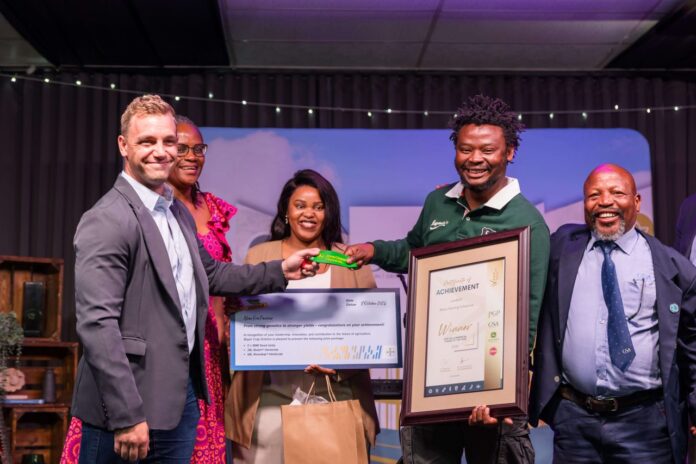
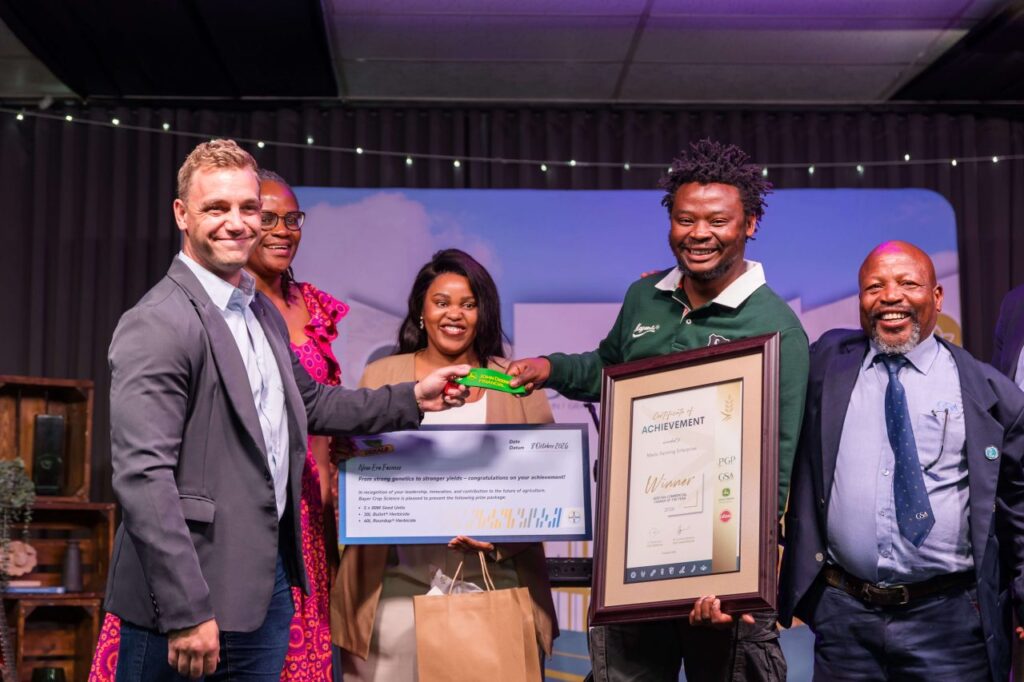
The Ukukhula Conference also recognised the achievements of developing farmers who have made measurable progress in building agricultural businesses.
Among the 2026 Farmer of the Year winners was Lubabalo Jordan from the Eastern Cape, whose maize production expanded from three hectares to 13 hectares through participation in Grain SA’s farmer-development programme.
Another recognised farmer, Kopano Lentswetshipi from North West, expanded production from 45 hectares to approximately 200 hectares.
These achievements demonstrate how access to knowledge, mentorship, improved production practices and investment can help farmers expand their operations.
The Masiu Farming Enterprise from the Free State was also recognised for its diversified agricultural operation, which includes maize, soybeans, sunflower and Bonsmara cattle.
Such examples highlight the potential of integrated farming and business diversification in strengthening agricultural enterprises.
Building a more competitive agricultural industry
South Africa’s agricultural future will depend on more than land redistribution or increased production.
The sector requires coordinated investment in infrastructure, financing, technology, skills development, biosecurity and access to domestic and international markets.
The latest developments highlighted by Grain SA demonstrate the importance of creating an environment in which emerging farmers can progress from subsistence production towards profitable commercial operations.
As the country prepares for another summer planting season, the ability to manage climate risks, protect livestock and strengthen agricultural businesses will remain critical.
Ultimately, successful agricultural transformation should be measured by the number of farmers who can build sustainable businesses, create employment, supply markets and contribute to South Africa’s long-term food security.
For South Africa, strengthening the foundation of agriculture means ensuring that farmers have not only access to land, but also the resources and opportunities to make that land productive and profitable.