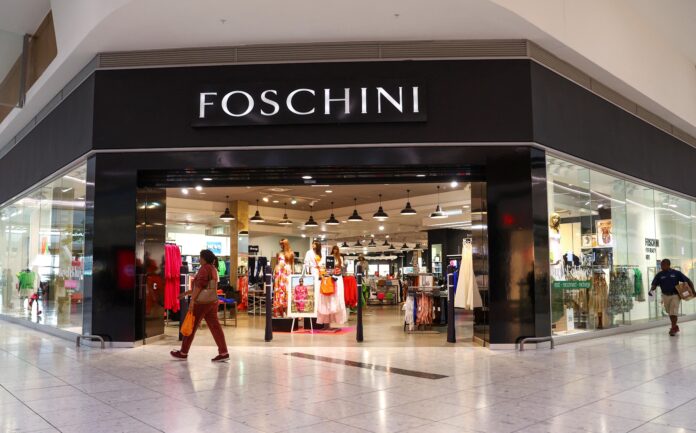


South African retail group The Foschini Group (TFG) is accelerating its digital transformation as online sales across its African operations increase by 53.3%, despite a challenging trading environment, weaker international performance and the closure of 120 stores during the first half of its 2027 financial year.
The JSE-listed retailer released its unaudited interim financial results on 6 November 2026 for the six months ended 30 September 2026, reporting group revenue of R31.4 billion, representing a marginal increase of 0.1% compared with the corresponding period last year.
However, group sales declined by 0.4% to R29 billion, while operating profit fell by 6.5% to R2.1 billion. Headline earnings per share (HEPS) decreased by 6.8% to 272.8 cents, reflecting continued pressure on profitability across its international operations.
The results highlight the contrasting performance of TFG’s African business and its operations in the United Kingdom and Australia, as the retailer continues to reposition its business around digital commerce, cost management and operational efficiency. 06/11/2026+1
Bash drives online sales growth
One of the strongest developments in TFG’s latest financial results is the performance of its digital commerce business, particularly its Bash platform.
TFG Africa recorded online sales growth of 53.3% during the six-month period, with digital sales now accounting for 10.9% of the division’s total sales, compared with 7.4% in the corresponding period last year.
The growth demonstrates the increasing importance of e-commerce in South Africa’s retail market, where consumers are increasingly using digital platforms to browse, compare and purchase products.
Bash forms an important part of TFG’s omnichannel strategy, connecting its online retail operations with its extensive physical store network. The platform provides access to products across several of the group’s fashion, beauty, lifestyle and homeware brands.
The company is also strengthening its fulfilment capabilities to support online demand and improve the customer shopping experience.
For TFG, the continued expansion of Bash represents an opportunity to increase customer reach while building a more capital-efficient retail model that is less dependent on physical store expansion. 06/11/2026+2
TFG Africa delivers stronger performance
TFG’s African operations remained the strongest contributor to the group’s overall performance.
The division recorded sales growth of 3.8% in rand terms, while operating profit increased by 2.7%. Retail turnover reached approximately R19.7 billion, supported by improved performance across several merchandise categories.
Beauty recorded growth of 11.4%, while jewellery increased by 6.5%. Homeware sales rose by 4.5% and clothing increased by 4%.
The company also reported that its market share in South African apparel increased by 20 basis points during the reporting period, according to information from the Retail Liaison Committee.
Despite these gains, the business continues to face pressure from subdued consumer spending, higher fuel prices and renewed interest rate increases, which have affected disposable household income.
TFG’s African performance suggests that demand remains relatively resilient in selected retail categories, although consumers continue to be cautious about discretionary spending. 06/11/2026+1
Retailer closes 120 stores as it reduces operating costs
Another important development in the interim results is TFG’s decision to close 120 underperforming stores in Africa during the reporting period.
The closures formed part of a broader strategy to simplify the group’s operations, improve productivity and reduce unnecessary operating expenses.
Across all three territories, TFG closed 178 stores and opened 71 new outlets, bringing its total store footprint to 4,807 at the end of September 2026.
The company reported that the store closures in Africa reduced trading space by 2.6%, while releasing approximately R190 million in working capital.
TFG also reported that cost-reduction initiatives removed R257 million in costs from its African business.
The strategy reflects a wider shift in retail, where businesses are reassessing the financial contribution of physical outlets while investing in digital channels and more efficient distribution systems.
Although physical stores remain important for customer engagement and product fulfilment, retailers are increasingly looking at how to balance their store networks with the growing demand for online shopping. techcentral.co.za+2
UK cyber incident affects international trading performance
TFG’s results also provide an update on the cyber incident affecting three of its British fashion brands: Phase Eight, Hobbs and Whistles.
The incident, previously disclosed by the company in October, affected the brands’ operations during the reporting period’s closing weeks.
According to TFG, demand on the affected brands’ websites declined by 30.2% during the five weeks ended 31 October 2026. Their physical stores continued operating, although trading took place at reduced levels.
The company indicated that the affected brands were recovering from the incident and confirmed that it had cyber insurance cover in place.
Its White Stuff brand, which was not affected, recorded sales growth of 4.8% during the same five-week period.
The incident highlights the growing operational and financial risks associated with cyberattacks in the retail industry, particularly for businesses that depend heavily on digital platforms and online customer transactions.
For retailers with international operations, maintaining secure digital infrastructure has become an important part of business continuity and customer confidence. techcentral.co.za+1
International operations face continued pressure
While TFG Africa delivered positive growth, its international operations experienced more difficult trading conditions.
TFG London recorded a 2.2% decline in sales in British pound terms, while TFG Australia reported a 4.4% decrease in Australian dollar terms.
The weaker performances reflect challenging consumer conditions in these markets, alongside operational pressures affecting the group’s international retail brands.
TFG continues to focus on cost control and improving the performance of its international businesses, particularly through operational restructuring and stronger management of its retail portfolio.
Cash generation and debt management improve
Despite the decline in operating profit, TFG reported improvements in cash generation and debt management.
Cash generated from operations increased by 20% to R3.7 billion, compared with R3.1 billion in the corresponding period last year.
The group’s net debt before IFRS 16 decreased to R9.1 billion, representing a reduction of approximately R900 million compared with the first half of the previous financial year.
TFG also declared an interim gross cash dividend of 121 cents per ordinary share, compared with the previous year’s interim dividend of 130 cents.
These developments indicate that the company continues to prioritise financial discipline and working capital management while investing in its digital operations. 06/11/2026+1
Outlook: Digital retail remains a strategic priority
TFG expects consumer spending to remain constrained in the near term, particularly as higher fuel prices and interest rate increases continue to affect household budgets.
The company reported that TFG Africa sales declined by 0.7% during the five weeks ended 31 October 2026, compared with growth of 3.7% in the corresponding period last year.
Nevertheless, the group enters the second half of its financial year with a leaner cost base, lower inventory levels, reduced debt and stronger online sales momentum.
Its continued investment in Bash and digital fulfilment capabilities is expected to remain central to its long-term retail strategy.
For South Africa’s retail industry, TFG’s latest results illustrate how established retailers are adapting to changing shopping habits while navigating financial pressures and growing cybersecurity risks.
The company’s ability to translate digital sales growth into stronger profitability will be an important measure of its performance in the coming reporting periods.
Read more:https://tfglimited.co.za/investor-relations/reports-presentations/