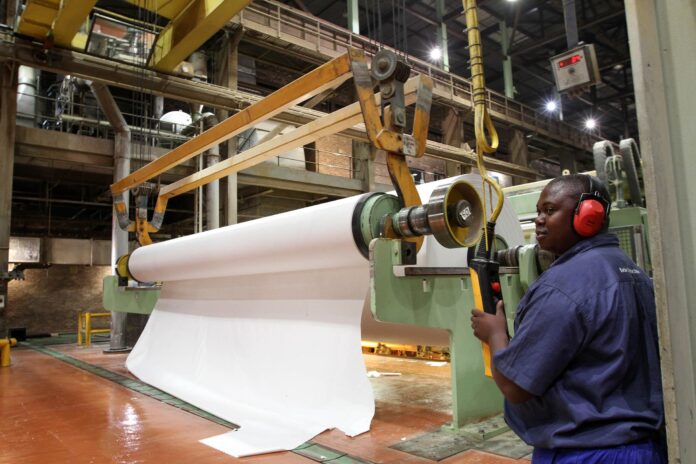


Sappi’s latest financial results highlight the pressure facing the global pulp, paper and packaging industries, with the South African-based group reporting a substantial annual loss as weaker market conditions, currency movements and rising operating costs weighed on performance.
For the financial year ended 30 September 2026, Sappi recorded a loss of US$747 million, compared with a loss of US$177 million in the previous financial year. The results, released on 6 November 2026, also showed that revenue declined by 3% to US$5.277 billion from US$5.420 billion.
Adjusted earnings before interest, tax, depreciation and amortisation (EBITDA) fell by 41% to US$294 million, down from US$501 million in the 2025 financial year. The company’s headline loss per share widened to 69 US cents from 15 US cents, reflecting the difficult conditions experienced across several of its markets.
Global market pressures weigh on performance
Sappi attributed the weaker performance to challenging conditions across many of its paper categories, a stronger South African rand against the US dollar and significant cost inflation.
The stronger rand affected the profitability of the company’s South African operations, while higher fuel, logistics and chemical costs added pressure to production and distribution expenses. Sappi also highlighted the impact of geopolitical tensions, particularly the conflict in the Middle East, on global supply chains and operating costs.
These pressures came at a time when the group was already managing subdued demand in several paper markets and structural changes in the graphic papers industry.
The company’s financial performance demonstrates the sensitivity of large manufacturing businesses to movements in exchange rates, energy prices, raw material costs and international demand. For a group operating across multiple regions, changes in global market conditions can affect both the cost of production and the value of earnings generated in different currencies.
Packaging and speciality papers show signs of improvement
Despite the overall decline in annual profitability, Sappi reported improved performance in parts of its packaging and speciality papers business.
The segment benefited from the continued commercial ramp-up of the Somerset Mill PM2 paperboard machine in North America, as well as early signs of recovery in global packaging markets.
In North America, paperboard market conditions improved as industry capacity rationalisation and stronger downstream demand contributed to a more balanced supply-and-demand environment. Sappi also reported that operational performance at Somerset improved during the second half of the financial year, with production stability, product quality and sales volumes strengthening.
For the full year, packaging and speciality papers sales volumes increased by 9%, supported mainly by higher paperboard volumes from Somerset Mill.
South Africa’s containerboard market also continued to benefit from underlying demand, supported by agricultural activity. However, the company said profitability remained under pressure from low-priced imports, which were made more competitive by the stronger rand.
Pulp business faces pricing and cost challenges
Sappi’s pulp segment experienced several headwinds during the year. Profitability declined compared with the previous financial year, mainly because of lower selling prices earlier in the period and the adverse effect of exchange rate movements on its South African operations.
Pulp sales volumes decreased by 3%, while dissolving wood pulp sales volumes fell by 4%. The company said approximately 38,000 tonnes of dissolving wood pulp sales were delayed from the fourth quarter into the first quarter of its 2027 financial year because of congestion at the Port of Durban.
Although market conditions and pricing improved during the second half of the year, average dollar selling prices for the pulp segment remained 6% below the previous year.
Higher production costs also affected the business, particularly increased sulphur costs at the Saiccor Mill in KwaZulu-Natal. These cost pressures illustrate the importance of reliable logistics and competitive input costs for South African manufacturers serving international markets.
Graphic papers remain under structural pressure
The graphic papers segment continued to face a longer-term decline as customers increasingly shift from printed materials towards digital alternatives.
Sappi reported that sales volumes in the segment were 7% lower than the previous year. European markets remained difficult, with excess production capacity and competitive pressures affecting trading conditions.
The company has been pursuing strategic changes to improve the sustainability of its graphic papers operations. One important development is its proposed joint venture with UPM involving the companies’ European graphic papers businesses.
Sappi and UPM submitted remedy proposals to the European Commission on 4 November 2026 as part of the regulatory review process. Sappi said it expected a decision early in January 2027. The proposed transaction is intended to combine complementary businesses and create a more resilient operating structure, subject to regulatory approval.
Debt and cash management remain priorities
The weaker earnings performance also affected Sappi’s balance sheet. Net debt increased to US$2.05 billion at the end of September 2026, compared with US$1.92 billion a year earlier.
The group used US$146 million of cash during the financial year. It reported liquidity of US$707 million, consisting of US$165 million in cash and US$542 million in committed, undrawn revolving credit facilities.
Sappi said it continued to focus on preserving liquidity, controlling capital expenditure and maintaining financial flexibility. Capital expenditure for the year was US$210 million, below its guidance of US$240 million, as spending was concentrated on essential maintenance, regulatory requirements and operational reliability.
The company also confirmed that lenders had extended the suspension of covenant testing under its international revolving credit facility and bank term debt to June 2027. Revised leverage covenant thresholds were agreed, providing additional headroom through December 2027.
Outlook for the 2027 financial year
Sappi expects the operating environment to remain uncertain during the 2027 financial year. Geopolitical tensions, elevated oil prices, supply-chain disruptions and broader economic uncertainty are expected to continue influencing raw material, fuel and logistics costs.
However, the company identified improving conditions in selected product categories. Demand for dissolving wood pulp remained robust, supported by activity in the viscose staple fibre market, while pricing momentum continued into October.
The group also expects the improving performance of Somerset Mill PM2 and firmer paperboard pricing to support its North American operations.
Nevertheless, Sappi cautioned that adjusted EBITDA for the first quarter of the 2027 financial year is expected to be below the fourth quarter of 2026. Planned maintenance shutdowns and higher oil-related input and logistics costs are expected to weigh on the period.
Sappi’s latest results underline the challenges facing global manufacturers as they balance market volatility, rising costs, currency movements and changing customer demand. The group’s ability to improve operational performance, manage debt and benefit from recovering pulp and packaging markets will be important in determining whether its financial performance strengthens during the year ahead.
Read more: https://www.sappi.com/en-us/investors/latest-financial-results