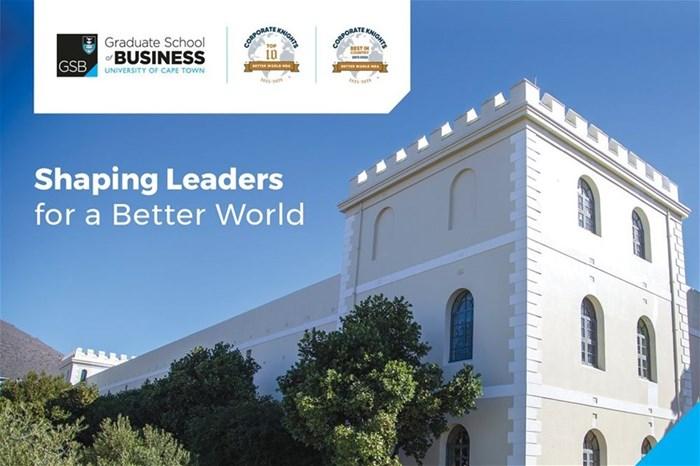
South Africa’s higher education sector has received international recognition after the University of Cape Town’s Graduate School of Business (UCT GSB) Master of Business Administration (MBA) programme climbed five positions to rank second globally in the 2026 Corporate Knights Better World MBA Ranking.
The achievement places the South African institution among the world’s leading business schools for integrating sustainability and responsible business practices into management education. UCT also retained its position as the highest-ranked business school in Africa in the latest assessment.
The ranking, announced on 5 November 2026, evaluated 166 MBA programmes worldwide and recognised institutions preparing business leaders to address economic, environmental and social challenges through responsible decision-making.
The result represents an improvement from UCT GSB’s seventh-place position in the previous year’s ranking, demonstrating the growing international recognition of its approach to business education.
Sustainability Takes Centre Stage in Business Education
The Corporate Knights Better World MBA Ranking is an international assessment examining how business schools incorporate sustainability into their teaching programmes and the professional impact of their graduates.
For the 2026 edition, sustainability content within compulsory MBA courses accounted for 80% of the assessment, while graduate impact contributed the remaining 20%.
The ranking placed Maastricht University’s School of Business and Economics in the Netherlands in first position, followed by UCT GSB in second place. Griffith Business School in Australia and the University of Vermont’s Grossman School of Business shared third position.
UCT’s performance highlights the growing importance of preparing business leaders who understand that organisational success extends beyond financial performance.
Businesses increasingly face interconnected challenges involving climate change, resource availability, technological disruption, social inequality and changing regulatory expectations.
Consequently, management education is evolving to equip graduates with the knowledge required to consider the wider consequences of corporate decisions.
Preparing Leaders for a Changing Business Environment
According to UCT GSB Director and Dean Dr Catherine Duggan, the institution’s approach focuses on preparing graduates to navigate complex and rapidly changing environments.
The university emphasises that business leaders operating in African markets must be adaptable, strategic and capable of solving problems while considering the effects of their decisions on society and the environment.
This perspective is particularly relevant for organisations operating across developing economies, where businesses frequently have to balance commercial objectives with infrastructure limitations, economic uncertainty and social development priorities.
Through its MBA programme, UCT GSB aims to develop graduates who can identify opportunities, respond to uncertainty and contribute to sustainable economic development.
The institution believes that African business schools have an important role to play in shaping international conversations about innovation, leadership and responsible business practices.
AI and Sustainability Are Becoming Connected Skills
Another important development highlighted by the 2026 ranking is the changing relationship between technology and responsible management.
Artificial intelligence is increasingly influencing how organisations analyse information, manage operations and make strategic decisions. However, the technology also raises questions about environmental costs, ethical responsibility, accuracy, transparency and accountability.
UCT GSB’s Full-Time MBA Programme Director, Dr Wayne Moodaley, highlighted the importance of evaluating these considerations when incorporating artificial intelligence into business decision-making.
While AI can help organisations improve efficiency and process information more effectively, its adoption also requires an understanding of the potential risks and consequences.
For future executives, this means developing a combination of technological awareness, critical thinking, ethical judgement and sustainability knowledge.
The university’s approach reflects a wider shift in management education, where future leaders are expected to understand both the opportunities offered by emerging technologies and the responsibilities associated with their use.
Graduate Employability and Industry Expectations
The 2026 ranking also places greater emphasis on the impact of MBA graduates, recognising the importance of translating academic learning into practical professional contributions.
This reflects changing expectations within the global employment market, where organisations increasingly need managers who can connect business performance with long-term environmental and social outcomes.
Corporate Knights has highlighted that sustainable business activities are becoming increasingly important to corporate growth, particularly as organisations respond to climate-related risks, resource pressures and changing market expectations.
For South Africa, developing this type of leadership capability could support businesses seeking to strengthen their competitiveness while contributing to national development priorities.
Graduates with experience in sustainability, responsible management, innovation and technology governance may be better positioned to contribute to organisations navigating these changes.
The achievement also reinforces the importance of connecting higher education institutions with the practical challenges facing employers and the wider economy.
Strengthening South Africa’s Position in Global Higher Education
UCT GSB’s second-place global ranking is an important achievement for South African higher education and the continent’s broader academic reputation.
It demonstrates that African institutions can compete internationally by developing programmes that respond to complex global challenges while drawing on the experiences and opportunities of their own economies.
The result also provides an opportunity for South African business schools to strengthen their contribution to research, leadership development and responsible entrepreneurship.
As organisations continue to navigate artificial intelligence, environmental pressures and changing economic conditions, the demand for business leaders with a broader understanding of sustainability is likely to remain important.
UCT’s performance sends a strong message about the value of integrating sustainability into mainstream business education rather than treating it as a separate or optional subject.
The university’s achievement therefore represents more than an improvement in an international ranking. It highlights the growing importance of preparing graduates who can lead organisations responsibly, support innovation and contribute to a more sustainable economic future