
The global robotics industry has reached an important milestone as Agility Robotics officially entered the public market on 5 November 2026, becoming the first United States publicly listed pure-play humanoid robotics company with active commercial deployments. The development highlights the growing transition of artificial intelligence (AI) from digital applications into physical environments, where intelligent machines are increasingly being developed to perform practical tasks alongside human workers.
The company announced that its common stock and warrants would begin trading on the Nasdaq Stock Market under the ticker symbols AGLT and AGLTW, respectively, following the completion of its business combination with Churchill Capital Corp XI.
According to Agility Robotics, the transaction and related financing generated approximately US$465 million in gross capital before transaction expenses. The funding is expected to support the company’s commercial expansion, increase robot production and accelerate the development of its physical AI technology.
Growing demand for humanoid robots
Agility Robotics enters the public market with an established commercial foundation, reporting nearly three years of real-world deployment experience and more than 65,000 hours of robot operation.
The company also disclosed that it has secured more than US$300 million in committed multi-year orders for its next-generation Digit 5 humanoid robot. These orders remain subject to contractual milestones, product features and specifications.
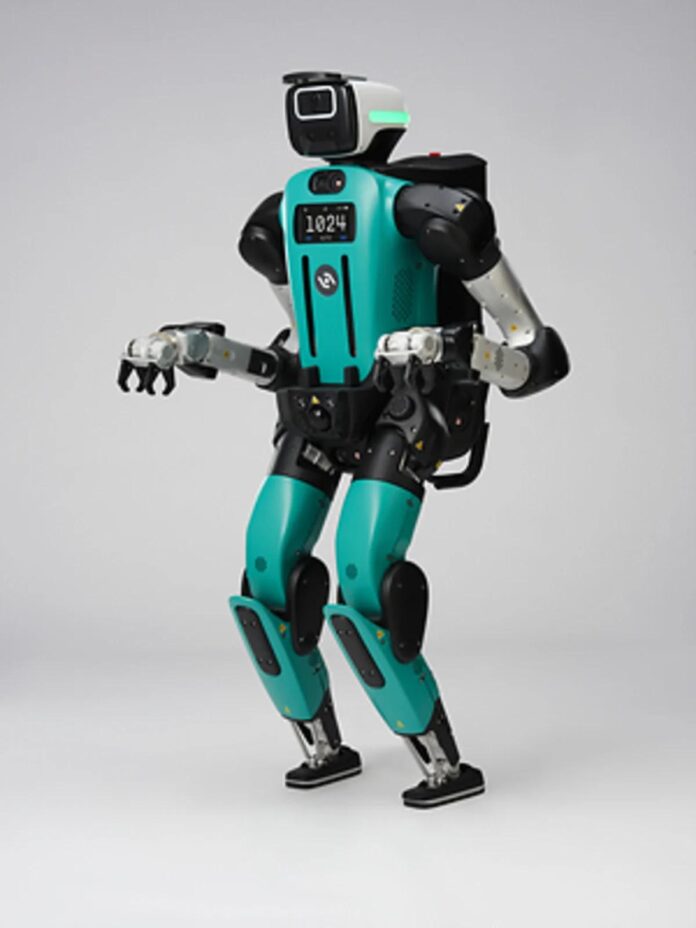
The Digit platform is designed to operate in environments originally built for people, including warehouses, manufacturing facilities and logistics operations. Its purpose is to automate repetitive and physically demanding activities while helping businesses address labour shortages and improve operational efficiency.
Agility’s robots are already being used by major enterprises, including GXO, Schaeffler and Toyota Motor Manufacturing Canada. These commercial relationships demonstrate how humanoid robotics is moving beyond experimental demonstrations towards practical applications in industrial workplaces.
The company has also reported an active pipeline of more than 30 prospective customers across automotive, manufacturing, aerospace, logistics, consumer products and defence.
Digit 5 introduces new industrial capabilities
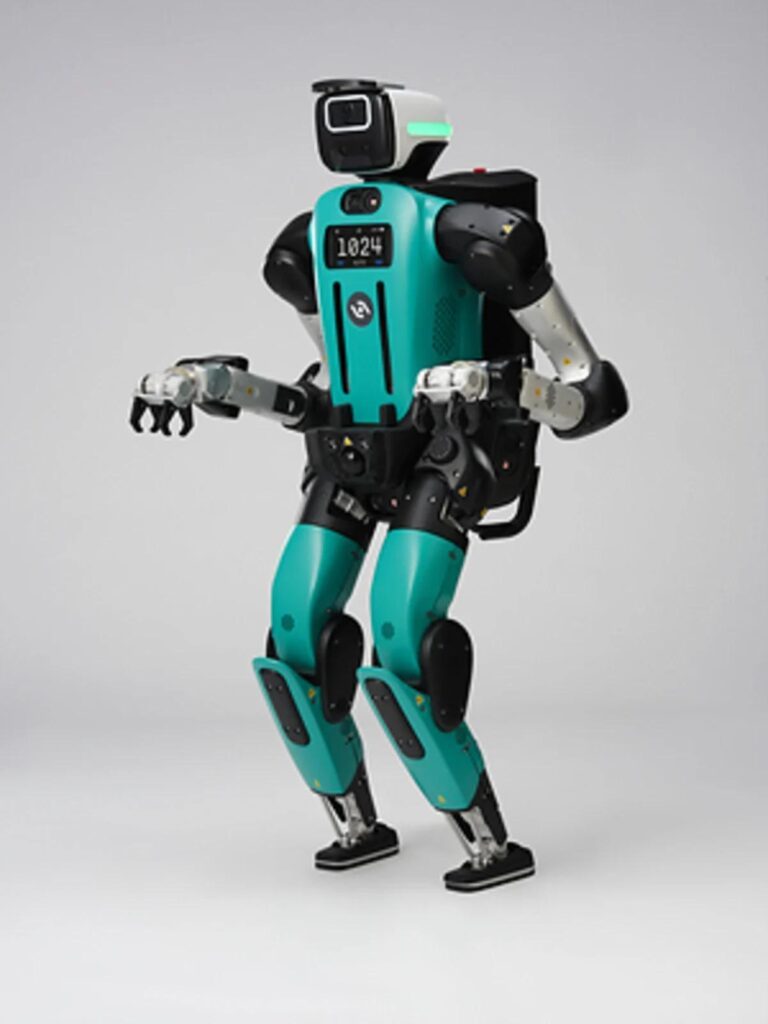
At the centre of Agility’s expansion strategy is Digit 5, its latest humanoid robot designed to perform a wider range of industrial tasks.
Unveiled in September 2026, Digit 5 incorporates improvements developed through customer feedback and years of operational experience. The platform features proprietary cycloidal actuator technology designed to support repetitive lifting of up to 50 pounds, approximately 22.7 kilograms.
It also includes interchangeable end effectors and expanded manipulation capabilities, allowing businesses to explore additional automation opportunities across different industrial workflows.
A major consideration in developing humanoid robots is ensuring that machines can operate safely in environments shared with people. Digit 5 is being developed with cooperative safety capabilities intended to allow closer interaction between robots and human workers.
Agility expects early customer access to the new platform in the first half of 2027, with general availability targeted for the end of that year.
Strategic partnerships support physical AI development
Agility’s progress is supported by collaborations with major technology companies, including NVIDIA, FORT Robotics and Nyobolt.
The company’s collaboration with NVIDIA involves plans to standardise Digit 5’s onboard computing on NVIDIA IGX Thor and expand its integration of NVIDIA Halos safety technology.
These developments are intended to strengthen the computing and safety capabilities required for industrial robotics.
Meanwhile, its partnership with FORT Robotics supports the development of safety systems for industrial environments. Nyobolt is contributing ultra-fast-charging battery technology designed to enable Digit 5 to recharge in approximately nine minutes and achieve more than 20 hours of productive operation within a 24-hour period.
The combined technologies reflect the importance of computing performance, battery efficiency and workplace safety as manufacturers explore the commercial potential of humanoid machines.
Manufacturing capacity becomes a priority
Scaling humanoid robotics requires more than developing advanced machines. Companies must also establish the manufacturing facilities, software systems and customer support infrastructure needed for large-scale deployment.
Agility has invested in RoboFab, its 70,000-square-foot manufacturing facility in Salem, Oregon, which is designed to support annual production capacity of up to 10,000 robots.
The company also operates a facility in Fremont, California, focused on hardware and physical AI development, while its planned expansion in Pittsburgh is expected to strengthen software engineering, artificial intelligence, deployment and customer support capabilities.
Its Agility Arc cloud-based software platform is designed to help businesses manage robot fleets and integrate machines into existing customer operations.
The investments indicate that the company is preparing for a larger commercial market rather than concentrating exclusively on individual robot demonstrations.
What this means for the future of business
Agility Robotics’ public listing represents an important development for the emerging humanoid robotics industry. It provides investors with greater visibility into a company attempting to commercialise machines capable of undertaking physical work in existing industrial environments.
For manufacturers, retailers and logistics operators, the technology presents potential opportunities to automate repetitive processes, improve workflow consistency and reduce the physical demands placed on employees.
However, commercial adoption will depend on several factors, including the cost of deployment, reliability, workplace safety, maintenance requirements and the ability of robots to perform tasks consistently in complex environments.
The financial backing and customer commitments announced by Agility demonstrate growing commercial interest, but they do not guarantee future profitability or widespread adoption.
As AI continues to evolve, the next phase of technological transformation may increasingly involve machines that can interact with the physical world rather than simply process information.
Agility Robotics’ Nasdaq debut therefore represents more than a corporate milestone. It offers a glimpse into how robotics, artificial intelligence and industrial automation could reshape the future of work, manufacturing and global supply chains.