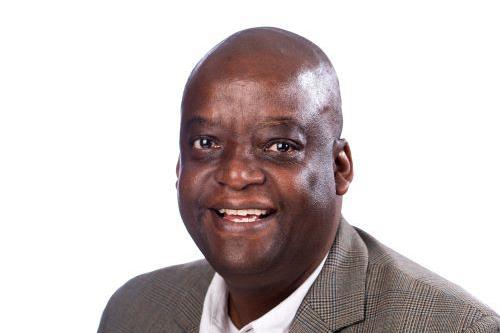
South Africa’s higher education sector is celebrating new milestones in academic leadership and scientific research following three important announcements from the Tshwane University of Technology (TUT). The university has recognised the appointment of a new Executive Dean, alongside two academics whose research achievements have earned them places in prestigious national scientific organisations.
The developments highlight the growing contribution of South African universities towards strengthening academic leadership, developing research talent and advancing innovation in fields that are important to the country’s economic and social development.
The announcements, released on 11 November 2026, feature Prof Molefe Maleka, Dr Nsovo Mayimele and Prof Shengzhi Du, whose achievements reflect different aspects of academic excellence and leadership.
Prof Molefe Maleka takes leadership of Management Sciences
One of the major developments is the appointment of Prof Molefe Maleka as the new Executive Dean of TUT’s Faculty of Management Sciences.
His appointment introduces a new leadership chapter for the faculty, with a strong focus on academic performance, student success, research development and improved teaching environments.
Prof Maleka has outlined plans to strengthen collaboration across the faculty and improve the conditions in which students and academics work. His priorities include working more closely with university operations to improve teaching and learning facilities through better lighting, smart learning infrastructure and heating, ventilation and air-conditioning systems.
His leadership philosophy is built around four principles: listening without judgement, maintaining joy and perspective, encouraging continuous dialogue and practising active gratitude.
He also intends to strengthen relationships between the university and employers to increase opportunities for Work-Integrated Learning (WIL), helping students gain practical experience before entering the employment market.
Another important area of focus will be research and postgraduate development. Plans include workshops to help academics transform master’s dissertations and doctoral theses into publishable research.
The university’s announcement also highlights his interest in mentorship and academic writing, reflecting the importance of developing future researchers alongside improving institutional performance.
Dr Nsovo Mayimele joins South African Young Academy of Science
Another significant achievement is the election of Dr Nsovo Mayimele, a lecturer in TUT’s Department of Pharmaceutical Sciences, to the South African Young Academy of Science (SAYAS) as part of its 2026 cohort.
Her election recognises her academic achievements and provides an opportunity to contribute to scientific discussions, research collaboration and evidence-informed policymaking.
Dr Mayimele has an interdisciplinary background covering pharmacy, public health, pharmaceutical management, leadership and international development.
Her qualifications include a Bachelor of Pharmacy degree, a Master’s degree in Pharmacy in Public Health and Management from Sefako Makgatho Health Sciences University, an MSc in International Development from the University of Birmingham and a PhD from the University of the Witwatersrand.
Before joining TUT, she held managerial positions at the South African Pharmacy Council, where she contributed to professional affairs, pharmacy practice standards and the development of the pharmacy profession.
Her research interests include pharmaceutical manufacturing and industrial development in Africa, medicine shortages, antimicrobial stewardship, pharmacovigilance and medicine safety.
These areas are particularly important for a continent seeking to strengthen local pharmaceutical production, improve access to essential medicines and develop more resilient healthcare systems.
SAYAS provides a platform for emerging scientists to contribute to scientific discourse, collaborate across disciplines and participate in discussions addressing important societal challenges.
The 2026 cohort was formally inaugurated on 29 October as part of the Academy of Science of South Africa’s 30-year anniversary celebrations.
Prof Shengzhi Du receives prestigious scientific recognition
TUT has also announced the election of Prof Shengzhi Du as a member of the Academy of Science of South Africa (ASSAf).
Prof Du was among 78 distinguished scholars and scientists formally inaugurated as new members during the Academy’s Annual Awards Ceremony on 29 October 2026.
He is a Full Professor in TUT’s Department of Electrical Engineering and holds a South African Research Chairs Initiative (SARChI) Chair in Next Generation Telemanipulation and Teleoperation Platforms.
His research focuses on technologies that enable remote interaction, control and operation of industrial machinery.
These technologies have potential applications across industries where remote operations, intelligent equipment and advanced automation can improve efficiency and expand human capabilities.
Membership of ASSAf is regarded as one of the significant honours in South African academic and scientific circles. Candidates are selected through a rigorous peer-review process that recognises exceptional research contributions and commitment to advancing science.
Prof Du’s election brings further recognition to TUT’s research capabilities and its contribution to South Africa’s scientific development.
The 2026 intake brings the total number of ASSAf members to 843.
Strengthening South Africa’s research and skills pipeline
The three announcements demonstrate how universities contribute to national development beyond traditional classroom teaching.
Academic leadership helps institutions improve their performance, strengthen relationships with employers and create better opportunities for students. Research recognition, meanwhile, gives academics opportunities to participate in wider scientific networks and contribute knowledge that can influence industry, healthcare and public policy.
South Africa continues to face the challenge of developing specialised skills and strengthening its research capacity. Universities therefore have an important responsibility to prepare graduates, support emerging researchers and encourage collaboration between academia, government and industry.
The focus on Work-Integrated Learning in Prof Maleka’s leadership plans is particularly relevant as employers increasingly seek graduates who can combine academic qualifications with practical workplace experience.
Similarly, Dr Mayimele’s work in pharmaceutical sciences and Prof Du’s research in advanced engineering technologies demonstrate the importance of connecting scientific research with real-world challenges.
For South African institutions, recognising academic achievement is only one part of the process. Sustained investment in research, postgraduate development, mentorship and industry partnerships will be essential to turning academic excellence into measurable social and economic benefits.
As TUT enters this new chapter, the achievements of its academics highlight the value of investing in people, research and institutional leadership to strengthen South Africa’s future knowledge economy.