
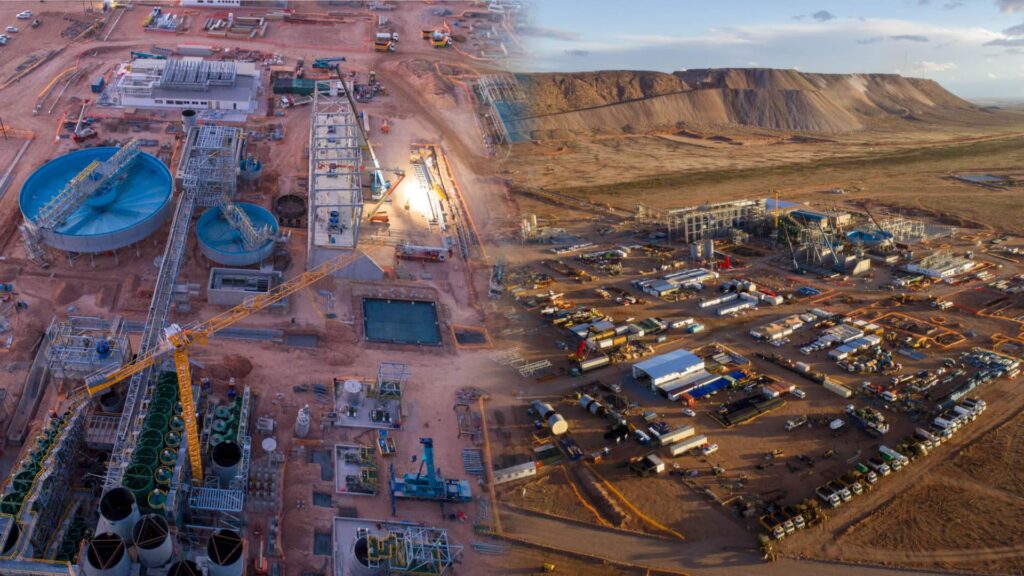
South Africa’s mining and construction sectors are preparing for a significant industrial milestone as Vedanta Zinc International’s Gamsberg Phase II expansion moves into the spotlight ahead of its planned inauguration on 16 October 2026. The project in the Northern Cape highlights the role of large-scale mining investment in expanding mineral production, supporting employment and developing regional industrial capacity.
In an announcement published on 12 October, the Presidency confirmed that President Cyril Ramaphosa is scheduled to officiate the inauguration at Gamsberg Mine, situated in the Khâi-Ma Local Municipality in the Namakwa District. The event is expected to bring together government, business, employees and community stakeholders.
Expanding South Africa’s zinc production capacity
The Phase II expansion is among the largest mining investments in South Africa over the past decade, according to the Presidency. Once operational, the expanded operation is expected to increase annual zinc-in-concentrate capacity to approximately 500,000 tonnes.
The development is intended to strengthen Gamsberg’s position in the international zinc industry and expand South Africa’s contribution to a mineral used in galvanised steel, construction materials, infrastructure and manufacturing.
Zinc plays an important role in protecting steel from corrosion. Its applications include roofing, structural components, pipelines and other products exposed to weather and demanding operating conditions. A larger domestic production base could therefore strengthen the country’s position in mineral supply chains serving industrial and construction markets.
However, the commercial benefits will depend on actual production performance, operating costs, market demand and the ability to move products efficiently to customers.
Employment and regional economic opportunities
The Presidency expects the expanded operation to sustain between 800 and 1,000 jobs during operations, predominantly recruited from the Northern Cape.
For the surrounding region, employment at a major mine can support economic activity beyond the mine gate. Workers and contractors create demand for transport, accommodation, maintenance, catering, equipment, engineering and other services.
Mining projects also create opportunities for construction and industrial contractors involved in earthworks, processing facilities, electrical systems, pipelines, roads and supporting infrastructure.
The extent to which local businesses benefit depends on procurement policies, contractor capability, skills availability and the ability of smaller suppliers to meet technical, safety and compliance requirements.
For businesses in the Namakwa District, the expansion offers a reason to monitor supplier opportunities and develop relationships with established mining contractors. Companies interested in participating should use the mine owner’s official procurement channels rather than rely on unverified third-party offers.
Why construction capability matters
Large mining expansions involve more than extracting additional ore. Processing capacity must be supported by dependable power, water supply, materials handling, maintenance systems and transport infrastructure.
Engineering and construction teams must coordinate multiple activities while maintaining strict safety and quality standards. Delays in one part of a project can affect commissioning schedules, production targets and the timing of expected revenue.
Once construction is completed, the focus shifts to commissioning, equipment reliability, workforce readiness and achieving planned production rates. The difference between installed capacity and actual output is particularly important when evaluating a mining project’s long-term performance.
The Gamsberg expansion therefore provides a useful case study in how infrastructure investment, engineering delivery and operational planning interact in the resources sector.
Implications for the construction industry
For construction companies, the mining sector remains an important source of demand for specialist services. These include civil engineering, structural steelwork, mechanical installation, electrical infrastructure, instrumentation, piping and ongoing plant maintenance.
The transition from project construction to operations can also create demand for contractors capable of maintaining industrial equipment and supporting production efficiency.
Companies seeking to benefit from similar projects need more than competitive pricing. Mining clients typically require demonstrated technical competence, appropriate safety systems, reliable project controls and the ability to work within complex industrial environments.
The expansion also reinforces the importance of developing local technical skills. Engineering, artisan training, equipment maintenance and operational support can all contribute to a stronger regional supplier base.
What businesses should watch next
The planned 16 October inauguration will provide a focal point for attention on the project’s development. Businesses and investors should continue monitoring official updates on commissioning, production performance, employment and supplier participation.
It is also important to distinguish announced capacity from actual output. The long-term economic contribution will depend on the project’s ability to operate consistently and convert investment into sustainable production.
For South Africa, the wider question is how major mineral developments can support stronger industrial linkages, local enterprise growth and more resilient regional economies.
Gamsberg Phase II illustrates the connection between mining investment and construction capability. Its next stage will be measured not only by the scale of the infrastructure, but also by operational delivery and the lasting economic opportunities created around it.