
South Africa’s agricultural transformation agenda is receiving renewed attention following a presidential update on 12 October 2026 that placed land ownership, access to finance and practical farming skills at the centre of efforts to expand commercial agriculture. The announcement highlights an important challenge for the sector: making more land productive while ensuring that emerging farmers have the resources to build sustainable businesses.
In his weekly newsletter, President Cyril Ramaphosa highlighted the government’s Proactive Land Acquisition Strategy, under which approximately 2.5 million hectares of state-owned land are being released to black farmers, with title deeds intended to strengthen their access to land.
The initiative is part of a wider effort to expand South Africa’s agricultural production base, improve participation in commercial farming and develop businesses capable of supplying domestic and export markets.
Land access is only the beginning
Access to productive land is an important starting point for agricultural development, but it does not automatically translate into a commercially successful farming enterprise.
Farmers require working capital, machinery, seeds, fertiliser, livestock, water infrastructure, electricity, storage facilities and reliable access to buyers. They must also manage production costs, changing weather conditions, animal diseases and fluctuating commodity prices.
For a new farmer, the gap between receiving land and operating a productive commercial enterprise can be substantial. Without finance and technical support, land may remain underutilised or generate insufficient income to cover operating expenses.
The government’s latest position recognises this challenge by placing land access alongside financing, mentorship, training, agricultural technology and knowledge-sharing.
The next stage will be important for determining how these components are coordinated and how quickly beneficiaries can establish sustainable production.
Redlands Farm demonstrates the role of financing
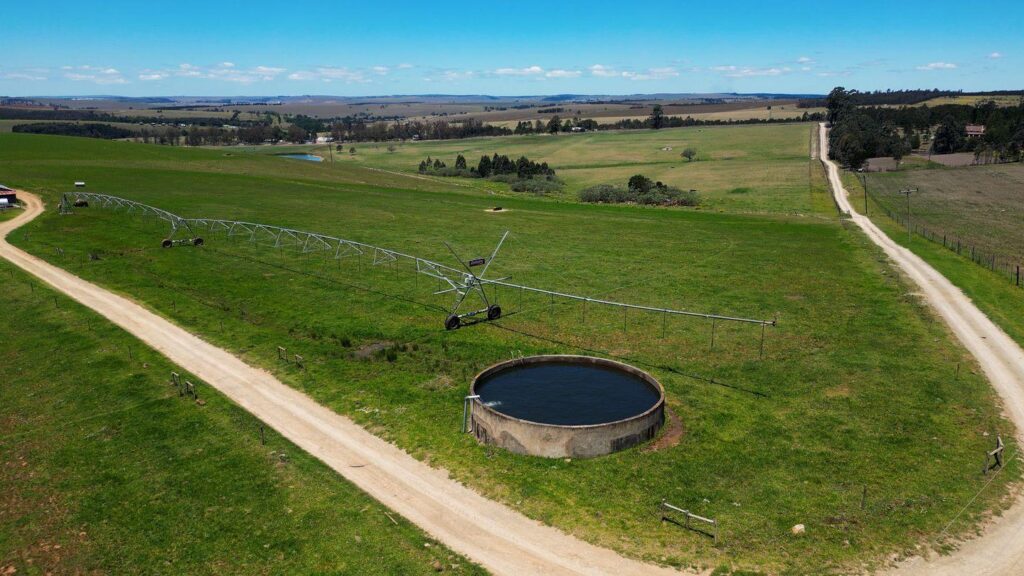
The presidential update highlighted Redlands Farm, a commercial dairy operation in Stutterheim in the Eastern Cape owned and operated by young black farmers.
According to the Presidency, the farm has expanded with support from the Land Bank’s Blended Finance Scheme. The programme combines government grant funding with loan finance to support qualifying agricultural businesses.
Blended finance can help address a common obstacle facing developing enterprises: the need to fund substantial upfront investment before a farm generates enough revenue to support expansion.
In dairy farming, capital may be required for livestock, milking equipment, feed storage, water systems, animal housing, cooling facilities and other essential infrastructure. Producers must also manage ongoing costs associated with feed, veterinary care, labour, transport and maintenance.
A financing structure that combines grant assistance and loans can potentially reduce some of the barriers to investment. However, businesses still need workable production plans, sound financial management and sufficient market demand to remain viable.
Redlands provides a practical example of how access to capital can support agricultural growth when combined with operational experience and business development.
Building a stronger agricultural economy
Agriculture contributes to employment, food security, manufacturing supply chains and export earnings. In his 12 October newsletter, Ramaphosa cited approximately R270 billion in South African agricultural exports for 2025 and highlighted the sector’s contribution to rural employment.
The opportunities extend beyond farms themselves. Agricultural production creates demand for transport operators, equipment dealers, irrigation specialists, packaging companies, cold-storage providers, food processors and professional services.
Expanding the number of productive commercial farms could therefore create opportunities across the wider agribusiness value chain.
For example, higher milk production can support dairy processing, packaging and distribution. Increased fruit and vegetable output can create demand for sorting, grading, refrigeration and export logistics. Grain production supports food manufacturing and animal-feed industries.
These benefits depend on consistent output, infrastructure capacity, market access and the financial sustainability of participating businesses.
Skills and mentorship remain essential
Commercial farming requires a combination of practical knowledge and business discipline. Farmers need to understand crop selection, soil conditions, water management, livestock health, pest control, machinery maintenance and production planning.
They must also manage budgets, negotiate contracts, keep records, comply with regulations and make investment decisions based on expected returns.
The Presidency highlighted the role of established commodity organisations, including Grain South Africa, the Citrus Growers’ Association, the National Wool Growers’ Association, Potatoes South Africa and other agricultural bodies in developing a more inclusive sector.
Mentorship can help emerging producers learn from established operators and avoid costly mistakes. Training and technical support can also improve productivity and prepare businesses to meet commercial buyers’ quality, volume and delivery requirements.
For agricultural organisations and agribusinesses, this creates an opportunity to strengthen farmer-development partnerships through training, equipment access, market linkages and practical production support.
Finance must reach productive businesses
The Land Bank’s Blended Finance Scheme is one of the mechanisms intended to improve access to capital. However, an official government update on 4 October reported a temporary pause on new applications following high demand and a funding shortfall.
The Agriculture Department had committed an additional R150 million, on top of R325 million already transferred to the Land Bank for the 2026/27 financial year, while discussions continued to resolve the situation.
This means that prospective beneficiaries should verify the latest application status and eligibility requirements directly with the Land Bank before making financial commitments.
The broader issue is the need for funding mechanisms that can respond to agricultural investment requirements without leaving viable producers unable to proceed during critical planting or production periods.
What the sector should watch next
The next important indicators will be the implementation of the land-release programme, access to title deeds, the availability of agricultural finance, and the ability of beneficiaries to move into sustainable commercial production.
Businesses should also watch for opportunities involving agricultural infrastructure, irrigation, equipment supply, cold storage, processing and farmer training.
South Africa’s agricultural growth will depend not simply on making land available, but on building a system that allows productive farms to grow, employ workers and reach reliable markets.
The 12 October announcement places this challenge firmly on the agenda. The long-term measure of success will be whether access to land, finance and expertise translates into stronger farm businesses, greater food production and more resilient rural economies.
Read more: https://www.thepresidency.gov.za/node/10469