
Zimbabwe’s mining sector has reached an important financing milestone after Caledonia Mining Corporation secured an interim banking facility of up to US$150 million to support the development of its Bilboes Gold Project in Matabeleland North.
The financing agreement, announced on 5 November 2026, brings together eight Zimbabwean financial institutions in a significant demonstration of domestic banking support for large-scale mining investment.
The development is expected to strengthen the project’s funding position as the company advances construction preparations and works towards establishing one of Zimbabwe’s major gold-producing operations.
Eight Zimbabwean Financial Institutions Participate in the Financing
Caledonia Mining Corporation confirmed that its subsidiary, Caledonia Holdings Zimbabwe (Private) Limited, signed the interim financing facilities agreement with a consortium of local financial institutions.
Stanbic Bank Zimbabwe and CBZ Bank, acting through CBZ Capital, served as the mandated lead arrangers.
The other participating institutions include Central African Building Society (CABS), FBC Bank, FBC Crown Bank, First Capital Bank, NMB Bank and ZB Bank.
The agreement provides access to financing of up to US$150 million, with a potential additional US$50 million available through an accordion option.
The facility is structured into two components.
The first is a revolving credit facility of up to US$50 million, carrying an interest rate of the Secured Overnight Financing Rate (SOFR) plus 8.10% per annum.
The second is a term financing facility of up to US$100 million, with an option to increase the amount by another US$50 million. It carries an interest rate of SOFR plus 7.90% per annum.
The term facility includes an 18-month availability period and capital repayment pause, after which repayments will be made quarterly.
The overall financing arrangement has a three-year term, with an option for a one-year extension.
Bilboes Gold Project Moves Closer to Development
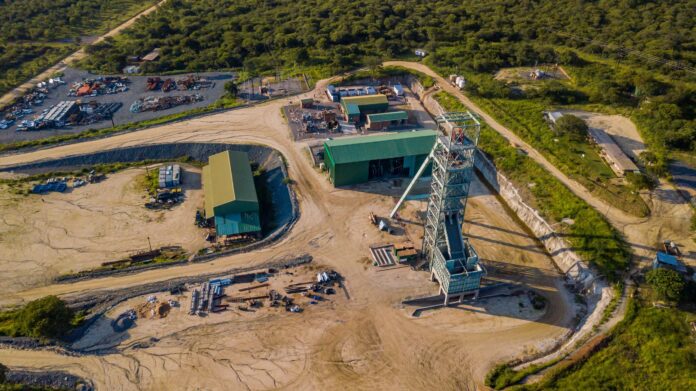
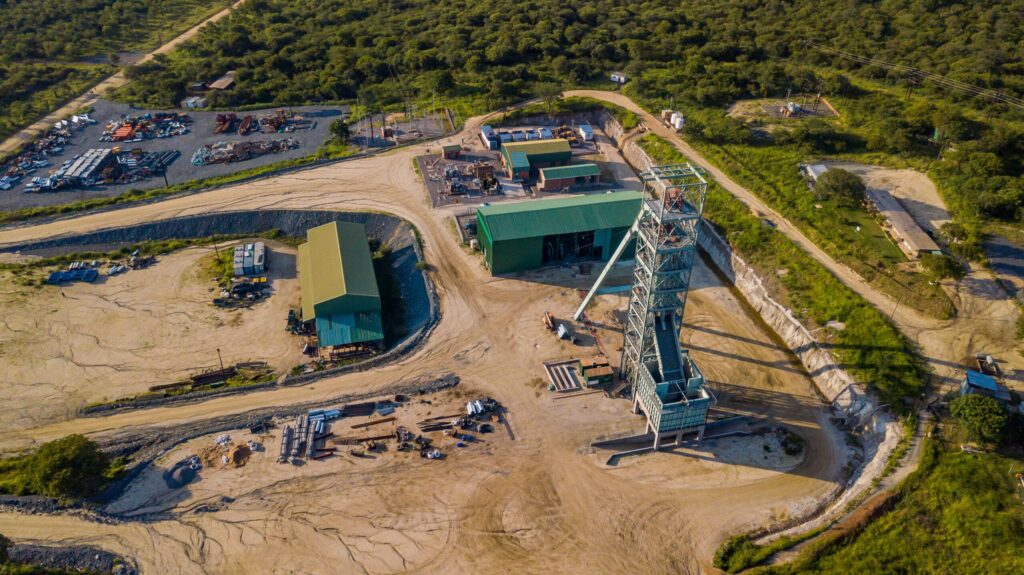
The financing is intended to support the development of the Bilboes Gold Project, located approximately 80 kilometres north of Bulawayo in Zimbabwe’s Matabeleland North Province.
Caledonia acquired the project in January 2023 and subsequently completed a comprehensive feasibility study that supported its decision to proceed with development.
The project represents an important component of the company’s long-term growth strategy and its ambition to increase gold production.
According to the company’s project information, Bilboes contains approximately 1.749 million ounces of proven and probable gold reserves.
The development is expected to produce approximately 1.55 million ounces of gold over an estimated mine life of 10.8 years.
Caledonia anticipates first gold production in October 2028, with production expected to reach approximately 200,000 ounces during the first full year of operation in 2029.
These projections position Bilboes as a potentially significant contributor to Zimbabwe’s gold industry and the country’s wider mining economy.
A Diversified Funding Strategy Supports Investment
The US$150 million interim banking facility forms part of a broader financing strategy developed by Caledonia to support the construction of Bilboes.
The company has been pursuing several funding arrangements to reduce reliance on a single source of capital.
In January 2026, Caledonia completed a US$150 million convertible notes offering, generating approximately US$130 million in net proceeds after associated costs.
The company also implemented a gold-price hedging programme designed to protect a portion of its existing production from unfavourable market movements.
The hedging arrangements cover 3,000 ounces of gold per month through December 2028, with a minimum price of US$3,500 per ounce.
The latest banking facility represents another important component of this strategy.
However, longer-term project financing remains under discussion with regional and international financial institutions. The company is continuing due diligence and engagement with prospective lenders as it works towards completing its overall funding structure.
Implications for Zimbabwe’s Banking and Mining Industries
The participation of eight domestic financial institutions highlights the important relationship between banking and mining investment.
Large mining developments require substantial capital to finance infrastructure, equipment, processing facilities, labour and other operational requirements.
When local financial institutions participate in these arrangements, they can help strengthen the relationship between domestic capital markets and productive sectors of the economy.
For Zimbabwe, the Bilboes financing agreement also demonstrates the potential for collaboration between established banking institutions in supporting major industrial developments.
The project could create opportunities across several supporting industries, including engineering, construction, transportation, mining services and equipment supply.
As construction progresses, local businesses may also benefit from procurement opportunities and demand for specialised services.
However, the project’s eventual economic contribution will depend on successful construction, financing, operational performance and the prevailing conditions in the international gold market.
Gold Production and Regional Investment Outlook
Zimbabwe remains an important gold-producing country in Southern Africa, and developments such as Bilboes could strengthen its position in the regional mining industry.
The project’s anticipated production profile also highlights the importance of access to reliable financing when developing large-scale mineral resources.
For investors and financial institutions, the agreement provides an example of how a combination of local banking support, international capital markets and commodity-price risk management can contribute to financing a major mining development.
The participation of Zimbabwean banks is particularly noteworthy because it demonstrates the capacity of domestic institutions to work together on financing arrangements involving substantial capital requirements.
As Caledonia advances the Bilboes development, attention will turn towards construction progress, the completion of long-term financing arrangements and the company’s ability to meet its targeted first-gold production date.
The US$150 million facility is an important step in that process, although it does not represent the full funding requirement for the project.
For Zimbabwe’s economy and Southern Africa’s mining industry, the development offers another indication of the role that financial institutions can play in supporting investment, industrial expansion and long-term economic activity.
Read more:https://www.sec.gov/Archives/edgar/data/766011/000168316826008319/caledonia_ex9901.htm?utm