
Iron ore has long been one of South Africa’s most important mineral exports, and Anglo American’s Kumba Iron Ore business remains the country’s dominant producer of the commodity. The company’s second-quarter 2026 production and sales report shows a business managing a familiar set of challenges — logistics constraints, seasonal weather, and softer output at one of its two flagship mines — while continuing to invest in longer-term quality improvements at its largest operation.
Kumba’s total production for the first half of 2026 decreased by 3% compared with the same period in 2025, a decline the company attributes primarily to a softer contribution from its Kolomela mine, partially offset by solid operating performance at its larger Sishen operation. Sales volumes were also 1% lower over the same period, which Kumba links to the first of two planned 10-day maintenance shutdowns on Transnet’s rail network in May 2026. Transnet, South Africa’s state-owned freight rail and ports operator, has for several years been a source of recurring concern for the country’s mining exporters, with logistics bottlenecks and infrastructure maintenance backlogs periodically constraining the volume of ore that can be moved from inland mines to coastal export terminals such as Saldanha Bay. Kumba’s chief executive, Mpumi Zikalala, has previously noted that despite these constraints, improving momentum in operational and logistics performance supports the company’s confidence in achieving its full-year production and sales guidance.
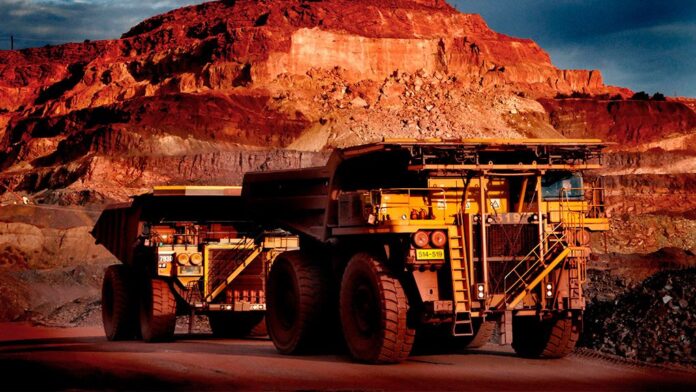
Despite the softer volumes, Kumba’s pricing performance has remained a bright spot. The company achieved an average realised export price of US$90 per wet metric tonne during the first half of the year, some 8% above the benchmark Fastmarkets 62% iron content free-on-board equivalent price — a premium the company attributes to the high quality of its iron ore products. This pricing strength has helped cushion the impact of lower production volumes on the group’s overall financial performance, even as total waste mining increased by 4% to 83.5 million tonnes, reflecting the natural progression of open-pit mining as operations move deeper and strip ratios rise over time.
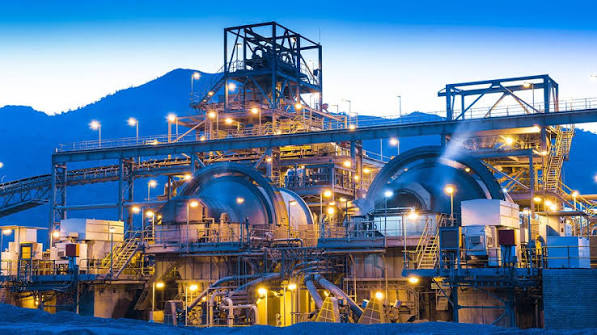
On the capital investment side, the most significant ongoing project at Kumba is the Ultra High Dense Media Separation (UHDMS) upgrade at its Sishen operation, a processing technology investment designed to improve the recovery and quality consistency of the iron ore the mine produces. The company has confirmed that construction of the project continues, with the critical main plant tie-in scheduled for the second half of 2026 — a milestone that is expected to have some short-term impact on production volumes as the new infrastructure is integrated into the existing plant, but which the company anticipates will support improved product quality and operational efficiency over the longer term. Kumba’s production guidance for 2026 remains unchanged at 31–33 million tonnes, though the company has flagged that output will be lower than 2025 levels specifically because of this planned UHDMS tie-in work.
Safety performance has also been a notable focus for the company this year. Kumba reported an improvement in its total recordable injury frequency rate to 0.80 for the first half of 2026, down from 1.18 in the same period the previous year, crediting the continued embedding of its Fatal Risk Management framework — a structured approach to identifying and mitigating the highest-risk activities across its operations — as a key driver of that progress.
Looking further ahead, Kumba has provided production guidance of 35–37 million tonnes for both 2027 and 2028, suggesting the company expects the UHDMS investment and other operational improvements at Sishen to support a step-up in output once the current construction and tie-in phase is complete. For an operation that remains heavily dependent on Transnet’s rail and port infrastructure to reach international markets, that longer-term production growth will likely depend as much on continued improvement in South Africa’s broader logistics network as it does on Kumba’s own mining and processing investments.