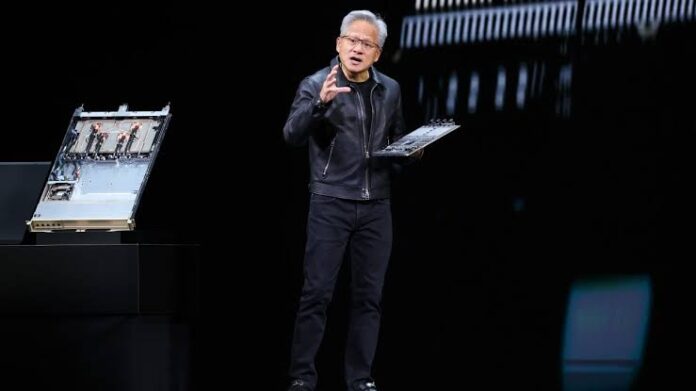

Nvidia CEO Jensen Huang has become something of a designated optimist-in-chief for the AI industry, and in his most recent CNBC appearance, alongside Jim Cramer, he leaned into that role once again. The interview landed during a heated moment for the industry: Anthropic CEO Dario Amodei had just published an essay arguing that leading AI labs should deliberately slow down, or pace the frontier, to give safety testing more time to catch up with rapidly advancing capability. Amodei suggested this kind of coordinated slowdown might even require antitrust waivers or direct government involvement to work in practice.
Huang’s answer was blunt. He does not dispute that AI safety matters, and he told Cramer that engineering products so they are genuinely safe to use is a real and serious responsibility. Companies, he said, should innovate as fast as they possibly can, but never so fast that they release something unsafe to the public. Where he parts ways with Amodei is on the remedy. Huang rejects the idea that fixing this requires new laws or fresh regulatory intervention from Washington. In his view, safety is fundamentally an engineering challenge that responsible companies can and should solve themselves, through rigorous testing and guardrails, not something that needs government mediation to enforce.
“We’re not going to die in 2030.”— Jensen Huang, on existential AI risk, CNBC interview with Jim Cramer, September 2026
He also pushed back on warnings that increasingly powerful AI models pose a near-term existential threat to humanity, arguing such predictions underestimate how much serious, careful engineering is already happening across the field. His reasoning amounts to a numbers argument: an enormous number of capable people and companies are working on AI simultaneously, and many are building safety technology and guardrails right alongside the models themselves, which makes runaway catastrophe far less likely than the doomsayers suggest.
A pattern, not a one-off comment
This wasn’t an isolated remark from a single interview. Over the past several months, Huang has repeatedly used television appearances and public forums to talk down specific, individual fears people have about AI, tackling them almost one at a time.
In February, after Nvidia posted an unusually strong sales forecast, Huang told CNBC’s Becky Quick that markets had misjudged how AI agents would affect the enterprise software industry. Rather than replacing traditional software tools outright, he argued, agentic AI would actually make companies rely on those tools even more, since autonomous agents still need underlying software to get real work done.
Speaking separately at a Goldman Sachs conference, Huang suggested some of the loudest AI-related fear circulating in the market was coming from an industry with a direct financial interest in selling the cure — pointing to new cybersecurity products timed to a conveniently manufactured sense of crisis.
In an interview with Axios, Huang also defended the continued use of open-source Chinese AI models, arguing the United States has considerably more to fear from banning access to good technology than it does from the technology itself.
And on the jobs question, Huang has pushed back repeatedly against warnings — including from Amodei directly — that AI could soon eliminate large swaths of entry-level white-collar work. His view instead is that AI will meaningfully reshape most jobs, including his own, rather than erase employment wholesale.
Why he’s making this argument now
The timing here is not incidental. Nvidia’s entire business is built on the premise that AI investment keeps growing, so Huang clearly has an obvious commercial stake in keeping confidence high. But his framing throughout these appearances has been less “AI carries no risk at all” and more “the risks are manageable through ordinary engineering discipline, not through public panic, new bureaucracy, or a deliberate industry-wide slowdown.”
That position puts him in fairly direct tension with figures like Amodei, who argue the sheer pace of AI development is itself the core problem worth addressing. That divide surfaced again just a day before the Cramer interview, when Huang, Amodei, and OpenAI’s Sam Altman offered visibly different takes on AI safety while sharing the same stage at Salesforce’s Dreamforce conference in San Francisco.
Whether Huang’s reassurance actually holds up is, naturally, still a matter of debate. Critics are quick to note that the person telling the public not to worry about a transformative technology also happens to be the one selling the chips that power nearly all of it. Even so, his core message across this string of interviews has remained consistent: fear on its own should not translate into new regulation or a coordinated slowdown, because the people actually building AI are already motivated and equipped to build it responsibly.