Just across South Africa’s northern border, Zimbabwe’s farming sector is going through its own historic moment. Government figures presented to Cabinet confirm that the country has recorded its largest maize harvest ever documented, marking a dramatic turnaround from the drought-hit seasons of recent years.
From Post-Cabinet Briefing to Confirmed Record
Zimbabwe’s maize harvest for the 2025/26 season was confirmed at 2,824,110 metric tonnes at the 18th Post-Cabinet Press Briefing, presented by Agriculture Minister Dr Anxious Masuka on 9 June 2026. The figure represents an upward revision of 482,253 tonnes, or 20.6%, from the 2,341,857 tonnes reported at the 16th briefing earlier in the season, as enumeration of the country’s 1,928,505 harvested hectares was completed through the Second Round Crop, Livestock and Fisheries Assessment Report.
Against Zimbabwe’s national human consumption requirement of approximately 2.2 million tonnes of maize, the confirmed harvest leaves a surplus of 624,110 tonnes — more than four times the thinner surplus implied by the earlier, lower estimate. Minister Masuka told Cabinet that, based on the same assessment report, the country is expecting to build a strategic grain reserve of between 550,945 and 964,945 tonnes, a substantial buffer against any future season of poor rainfall.
A Season Built on Expanded Planting
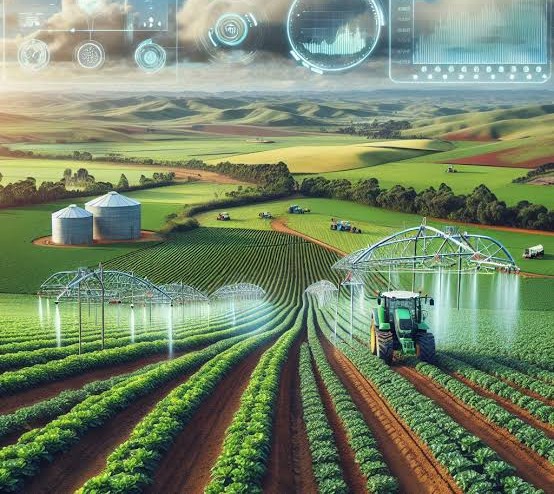
The record crop follows a strong start to the 2025/26 summer season, when Zimbabwean farmers planted 1,885,833 hectares of maize — 105% of the government’s 1.8-million-hectare target, and a 9% increase on the 1,728,897 hectares planted the previous season, according to figures from the Agricultural and Rural Development Advisory Services (ARDAS). Mashonaland West led provincial performance with 354,627 hectares planted against a target of 340,000, followed by Manicaland with 274,905 hectares against a target of 265,000.
Obert Jiri, Permanent Secretary for Zimbabwe’s Ministry of Lands, Agriculture, Fisheries, Water and Rural Development, credited favourable and well-distributed rainfall across most producing regions for allowing farmers to complete planting on time — a critical factor for yields in a farming system that remains largely rain-fed. He also noted improving livestock body condition nationwide as animals benefited from lush rain-fed grazing, while recommending mineral supplementation to support herd health through the season.
Beyond Maize: A Broader Recovery
The maize record has not been the only bright spot in Zimbabwe’s 2025/26 season. The same Second Round Crop, Livestock and Fisheries Assessment Report presented to Cabinet showed the country’s soya bean harvest reaching 119,067 metric tonnes from 56,562 hectares, lifting domestic soya bean supply self-sufficiency to 54%, up sharply from just 19% in 2015 — the highest level achieved since the country’s land reform programme. Zimbabwe’s winter wheat harvest for the preceding season had also set a record, with the Ministry of Lands, Agriculture, Fisheries, Water and Rural Development reporting a 59-year high of 639,942 metric tonnes.
Government has also moved to strengthen the marketing and storage side of the grain value chain. The state-run Grain Marketing Board (GMB) reported that it had settled all of its outstanding US-dollar payment obligations to farmers, alongside more than 82% of its local-currency (ZiG) obligations, as of 20 May 2026 — a step officials say is intended to rebuild farmer confidence in delivering grain to formal marketing channels ahead of future seasons.
Regional Significance
Zimbabwe’s turnaround forms part of a broader pattern across the Southern African Development Community (SADC) region this season, with several neighbouring countries — including Zambia and South Africa — also reporting exceptionally strong maize harvests in the same period. For Zimbabwe specifically, a confirmed surplus well above national consumption needs strengthens food security heading into a season where forecasters have flagged the risk of a stronger El Niño weather pattern later in the year, and reduces the country’s historical exposure to costly maize imports during lean seasons.
Government has pointed to the combination of expanded state-backed input support programmes, mobilised extension services, and favourable rainfall as the key drivers behind the recovery — and officials say the scale of this season’s harvest puts Zimbabwe in a considerably stronger position to manage any future production shocks than it has been in for several years.
Source: Government of Zimbabwe, Post-Cabinet Press Briefings (18th briefing, 9 June 2026), Second Round Crop, Livestock and Fisheries Assessment Report, Ministry of Lands, Agriculture, Fisheries, Water and Rural Development, as republished in full by Veritas Zimbabwe, a parliamentary and legislative monitoring organisation.